
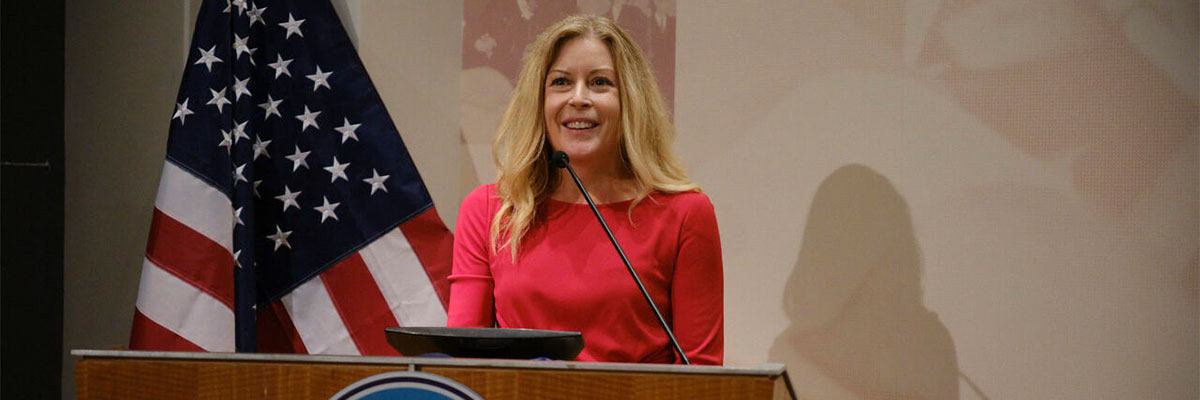
Regina Romero is the mayor of Tucson, Az. Her background is as an urban planner. So she makes plans, like the Million Trees campaign. Yes, she plans to plant one million trees in her city. But she has a lot more plans. Just listen
The Mayor Has a Plan, and a lot more Trees

This episode brought to you through the generosity of our supporters





RELATED POSTS

00:00:00:01 – 00:00:02:58
David Martin
This is the good government show.
00:00:03:03 – 00:00:21:47
Regina Romero
The 120 100 is our strategy as a city on how we live in drought and still have water for another hundred years in our community.
00:00:21:52 – 00:01:02:06
Regina Romero
We are the longest inhabited city in this country. More than 4500 years of continuous inhabitation of the city of Tucson. We can have the best ideas as as, elected officials, but they’re not good ideas. If they’re not informed by what your community wants and what they need. I want people to know that you still can trust your local government, and that you can make a difference.
00:01:02:11 – 00:01:20:37
David Martin
1 million trees. That’s the plan for the city of Tucson, Arizona. When Mayor Regina Romero took office, she set a goal. 1 million trees planted in her city by 2030. She’s well on her way. Welcome to the good government show. I’m Dave Martin. First, help us share the message of good government by liking us and sharing us where we are on social media.
00:01:20:37 – 00:01:37:58
David Martin
All your favorite sites. Make sure to give us and send our show everywhere. We all need to talk about good government. Tucson, Arizona is a city in the heart of the Sonoran Desert. But it’s not just sand. As the mayor will tell you, there are mountains, wildlife, and trees. But they need more trees. Yep. We’re going to talk about trees again.
00:01:38:03 – 00:02:01:34
David Martin
And this is what I keep hearing. Trees make a difference. Starting with lower temperatures to shade really makes a difference. Mayor Romero started as an urban planner and she makes plans. Her overall plan is to make sure Tucson is prepared for the future. The city feels the direct impact of climate change with higher temperatures. Her eye is on the future and doing what you can to help make her city well, just a little less hot.
00:02:01:38 – 00:02:19:30
David Martin
The city has a rich cultural heritage. Here’s a Tucson fun fact the city is one of the longest inhabited regions in the United States. People have been living there for over 4000 years. For the mayor, that means the city’s cultural heritage is important. Listen to what she says about the arts and about living very near the Mexican border.
00:02:19:43 – 00:02:42:06
David Martin
And of course, about planting trees. Coming up, Tucson, Arizona Mayor Regina Romero. We have a new partner here on the Good Government Show, hello, nation. This is a new digital magazine that showcases the best of cities across the nation. We’d all prefer if good news traveled faster. And hello, nation. Positive stories don’t just get told, they get amplified.
00:02:42:19 – 00:03:09:44
David Martin
Hello nation helps businesses, leaders, and communities share positive stories that matter building trust, credibility, and meaningful connection. Through professionally produced podcast, digital features and targeted distribution. Hello nation positions you as the answer regular folks are looking for while expanding and scaling your digital footprint across the platforms that people trust. Good news deserves momentum. Your city or your business can help spread the word of good news across the nation and hello nation!
00:03:09:48 – 00:03:32:56
David Martin
They don’t just have advertisers, they have advertisers. Editorial content from trusted community leaders and cities that are helping spread the good news. Let Hello Nation lift you up and lead the conversation. Visit Hello nation.com to learn more. Once you wrap up this episode of The Good Government Show, give a listen to our friends over at Good News for lefties.
00:03:33:03 – 00:03:54:52
David Martin
This daily podcast highlights news stories that show there’s more good news out there. Other people in government are really trying to do the right thing. That’s good news for lefties. Listen, we’re listening now. So welcome to the good government. I am so happy to be finally sitting down with Regina Romero, the mayor of Tucson, Arizona. Thank you for putting up with me and agreeing to sit down and talk.
00:03:54:54 – 00:03:57:12
Regina Romero
There is no thank you so much for making time for me.
00:03:57:21 – 00:04:08:28
David Martin
Thank you. So Tucson, Arizona. You know, when I think of Tucson, Arizona, you think of Arizona and desert. You were just saying. It’s not that. Tell everyone what Tucson is. Well, we’re.
00:04:08:28 – 00:04:36:32
Regina Romero
Blessed, to be in, the Sonoran Desert. This northern desert is one of the most biologically diverse places in this country. Very unique, to, to North America. We have, incredible flora and fauna. We have, wild spaces and wild animals and, only found in this area of our country.
00:04:36:37 – 00:04:40:25
David Martin
This is less people can see this, but your eyes always light up. Subscribe.
00:04:40:25 – 00:05:06:32
Regina Romero
Tucson. Ocelots. We have jaguars. We have have a lean, and deer. And it is, living place. And, you know, we also have incredible diversity and in our trees and, I know that you had asked me before we get all we have done on, live, what type of trees do we plant? Yes. We are not a desert.
00:05:06:32 – 00:05:32:58
Regina Romero
That is just sand. It is a beautifully mountainous, desert. It has saguaro studded mountainsides. And, we have elevation in our mountains. And so we’re, we’re of an incredibly beautiful, outdoors. Right. And so, that’s who we are. I know that you asked about trees before, and we met it.
00:05:32:59 – 00:05:49:45
David Martin
We met at one of the early sessions where there was a discussion about trees, and I talked to the American forests, and I talked to some other people, and they all said to me, you need to talk to Mayor Romero of Tucson, because no one has done more for tree planting than her. So what kind of trees are you planting and how many have you planted?
00:05:49:46 – 00:06:17:07
Regina Romero
Well, American for us is very, very kind, but, the city of Tucson is right in the middle of this in summer in desert. And, we are, we have very little, shade cover. We are, our numbers in terms of trees are very low, and we’re under parked. Even though we value as people, we value open spaces and wild lands.
00:06:17:12 – 00:06:46:29
Regina Romero
Right. And, we also it’s a and planting trees is a nature based solution to climate change. And especially in Arizona, especially in the southwest, we have been living through a drought for the past 24 years. And, with climate change, we are getting hotter and hotter and hotter by planting trees. We can see, temperatures drop, urban heat drop.
00:06:46:34 – 00:06:47:49
David Martin
Dramatically, which is a big.
00:06:47:49 – 00:06:48:47
Regina Romero
High degrees.
00:06:49:01 – 00:06:49:36
David Martin
Five degrees.
00:06:49:36 – 00:06:53:41
Regina Romero
That’s something anywhere from 5 to 8 degrees. Okay. And,
00:06:53:45 – 00:06:54:52
David Martin
Is that enough to make a difference?
00:06:54:52 – 00:07:24:29
Regina Romero
What we have found in American forests were incredibly helpful, to really map the city of Tucson and give us a tree equity score. And what we found is what we knew instinctively is that the low income areas of our city had less tree covering and had higher temperatures in our city. So I kicked off when I was running for mayor the first time in 2019.
00:07:24:34 – 00:07:41:05
Regina Romero
I knew this. I had done the research, and we figured that the city of Tucson need a million, needed a million trees to be able to catch up to other cities around the country. And so I ran on a platform of planting a million trees by 2030.
00:07:41:10 – 00:07:41:39
David Martin
How are we doing?
00:07:41:41 – 00:07:51:23
Regina Romero
And, six years later, we have planted 150,000 trees. That is record speed.
00:07:51:34 – 00:07:52:47
David Martin
Okay.
00:07:52:52 – 00:08:33:01
Regina Romero
And of course, a million trees is out there. Right? But we have moved fast and furiously created the Million Trees campaign, institutionalize it as a City of Tucson program. We partnered with private companies to help fund it. And we we partner with a nonprofit organization where private companies could donate to, I fundraised almost $1 million to, kick off the program while, we found funds in the federal government and the state government, to be able to continue funding the program, we created our landfill.
00:08:33:01 – 00:09:07:49
Regina Romero
We changed the name to the L’oreal’s Sustainability Campus. We have a tree center where we grow trees. Because, believe it or not, the nurseries were not able to grow trees fast enough at the speed that we were moving. We created a program that’s called the Storm to Shade program. It’s a green stormwater infrastructure. We charge a little bit more in our water utility company for our storm to Shade program, which waters the trees.
00:09:07:52 – 00:09:26:52
Regina Romero
Okay. In Tucson, where we have monsoon. So we have a rainy season, we promote water harvesting and we promote storm water harvesting. So we create the green stormwater infrastructure, plant the trees and water the trees with that, stormwater infrastructure.
00:09:26:52 – 00:09:27:52
David Martin
Growing and growing and.
00:09:27:53 – 00:09:40:07
Regina Romero
Growing trees. This sounds like the one question I have is like, how are you planting trees on the desert? Well, we’re planting native, drought tolerant trees, and we’re watering it with our stormwater.
00:09:40:16 – 00:09:41:43
David Martin
This sounds like good government.
00:09:41:48 – 00:09:44:05
Regina Romero
Thank you.
00:09:44:10 – 00:09:45:15
David Martin
Is this money well spent?
00:09:45:22 – 00:10:18:06
Regina Romero
Absolutely. During the Biden administration, we were very aggressive. Aggressive at pursuing grants from the bipartisan infrastructure law. And, the Inflation Reduction Act we received, competed for and received $5 million from the USDA to fund our Million Trees program. And now we’re funding our, tree center, where we’re growing trees. We are funding additional capacity for our storm to shade program.
00:10:18:06 – 00:10:34:50
Regina Romero
Our our green stormwater infrastructure. And we are training the future. We are paying, a youth, program with our nonprofit partners, training them on how to plant trees and how to care for trees.
00:10:34:51 – 00:10:37:33
David Martin
And hopefully you get an arborist out of all that contain.
00:10:37:38 – 00:10:43:38
Regina Romero
Right? Yeah. And so, we are investing in youth and in the future.
00:10:43:50 – 00:10:53:14
David Martin
I saw that you had a couple of programs. And these may be these may be related, Tucson resilient together and one water 2001. Are they are they related to what’s great?
00:10:53:15 – 00:11:32:16
Regina Romero
Absolutely. This is part of the work that we’re doing. We’re doing a comprehensive approach to climate change in our community. I pushed for the creation of a climate action and adaptation plan. We worked at, breakneck speeds with the community. Thousands of people gave us their input. We created an action plan. It’s called Tucson Resilient Together. We have really steps on what to do, to be able to adapt to a changing climate and to help bring those temperatures down with our 12 million trees.
00:11:32:16 – 00:12:03:52
Regina Romero
Camping. One water 2100 is basically our strategic plan on how to be a thriving desert city that has water enough to be able to sustain and thrive into the future. So 120, 100 is our strategy as a city on how we live in drought and still have water for another hundred years in our community.
00:12:03:57 – 00:12:13:24
David Martin
And I read a little bit about you, tell me about this this program called and interpreted please Somos uno. What does it mean? And what is it?
00:12:13:29 – 00:12:32:41
Regina Romero
So monsoon not you know, what I in my other life, I was an urban planner. All right? Because I am so into putting, master plans together. Strategic plans together. Action plans together on the very many issues that mayors we have to confront.
00:12:32:43 – 00:12:35:16
David Martin
That’s good government, because that now you’re planning. And now you know.
00:12:35:16 – 00:12:59:07
Regina Romero
What I mean. Right? And we have a plan. And then once we have a plan of what we want to do, we go after the money, we go after the funds, okay? And I’m not discriminatory. I go to the state government, I go to the federal government or wherever I go to foundations, I go to private sector to find money to put into action the work that we do.
00:12:59:18 – 00:13:32:26
Regina Romero
And so some know is our cultural heritage. Plan that the mayor and council just approved unanimously in January. And that particular, plan is to recognize the cultural, the heritage, the history that we enjoy as a city. We are unique not just in our desert and our environment, but we are unique as a community. We are the longest inhabited city in this country.
00:13:32:31 – 00:13:40:18
Regina Romero
We have more than 4500 years of continuous inhabitation, of the city of Tucson.
00:13:40:18 – 00:13:41:41
David Martin
And you’re on the Mexican border.
00:13:41:46 – 00:14:09:01
Regina Romero
We’re 60 miles away from the Mexican border. And so someone sooner is is here. I translation for we are one, right? And, we enjoy as Tucson ins. We enjoy our cultural heritage. We have that the northern people that are the native people of that land, the Pascua Yaqui. And then at a time, it was a Spanish territory, and then it became part of Mexico and then the United States.
00:14:09:10 – 00:14:34:21
Regina Romero
And so we have an incredibly diverse community, beautiful cultural heritage and history. And as a matter of fact, we gain from, our economy gains $1 billion a year, 50,000 jobs, that we have in Tucson are because of our history, our heritage, our culture and tourism.
00:14:34:26 – 00:14:36:49
David Martin
Well, you worry about tourism because, you know, we.
00:14:36:49 – 00:14:37:46
Regina Romero
Are we know.
00:14:37:48 – 00:14:38:56
David Martin
You’re on the.
00:14:39:01 – 00:14:39:26
Regina Romero
Border.
00:14:39:26 – 00:14:52:50
David Martin
You have a you have an open border in that it was very common for, you know, people in your city to go to Mexico, people from Mexico to come to Tucson for the day, to go shopping, go to dinner and have lunch. Is that still going on? And and if it’s not, how is it affecting you?
00:14:52:55 – 00:15:01:46
Regina Romero
Well, it is affecting our, first and foremost, I’m sensitive to words. We do not have an open port.
00:15:01:51 – 00:15:02:58
David Martin
Sorry, sorry.
00:15:03:03 – 00:15:23:52
Regina Romero
Sorry port of entry. And we have actually, the Tucson sector of the Border Patrol is one of the biggest sectors in the country. And so our border is absolutely secure. And we have a, port of entry that is one of the busiest ports of entry in the country. Ours. And San Diego is one of the busiest ports of entry.
00:15:23:53 – 00:15:27:05
David Martin
People understanding is that if you live on the border, that it’s.
00:15:27:16 – 00:15:28:27
Regina Romero
Well, it’s a.
00:15:28:31 – 00:15:31:43
David Martin
And she’s your pastor to to go back.
00:15:31:46 – 00:15:55:23
Regina Romero
We share not only trade but we share familial ties. Yes. As a matter of fact, we share a desert, right? The Sonoran Desert is on both sides of the border. And, I have family on the Mexican side of the, of the border. Many families in Tucson and in Arizona have family. And, on on the Mexican side, we visit each other.
00:15:55:33 – 00:15:56:35
Regina Romero
Right.
00:15:56:40 – 00:15:57:30
David Martin
Is that still going? Oh, we.
00:15:57:30 – 00:16:30:58
Regina Romero
Do grocery shopping, and it’s harder and harder because to come back from Mexico into Arizona, it takes you two and a half, three hours sometimes to come back because the port is so busy. And there’s so, you know, the, the, CBP, which is Customs and Border Protection, which are the officers that take care of the ports, are understaffed while Border Patrol is, outside of the ports of entry, which have much more staff.
00:16:31:02 – 00:17:05:12
Regina Romero
Anyway. But it it’s affecting us. What’s happening with Trump’s policies. It is really affecting the relationship and the economic, investments that in Tucson we see happen. We have seen that there are much less Mexican tourists and visitors coming to Tucson. So it is affecting our economy. They’re not coming because they’re afraid of being stopped by border patrol in our city, and in Arizona.
00:17:05:27 – 00:17:18:30
Regina Romero
And so as a, as, as a consequence, we are seeing our sales taxes diminish and drop in our community. And so what is happening nationally is affecting us locally.
00:17:18:34 – 00:17:29:19
David Martin
What would you like people to know about life in the United States, in Arizona, on the border with Mexico? What is it that people aren’t getting that they should understand?
00:17:29:24 – 00:17:33:00
Regina Romero
I think are a few things that are that are.
00:17:33:05 – 00:17:34:21
David Martin
Probably more reported, a few.
00:17:34:26 – 00:18:10:45
Regina Romero
Factually, absolutely wrong. And there’s a lot of disinformation, misinformation and just plain lies, that are being put out there sometimes, including from the white House and, we in, in Tucson, in Arizona. And as a matter of fact, in this country, Mexico is our number one trading partner in the country. Okay. It’s surpassed recently Canada. And so we have trade ties, to Mexico.
00:18:10:49 – 00:18:41:59
Regina Romero
Number one, our economy in Tucson and in Arizona is affected because we do see an incredible investment from Mexican tourists into Tucson. We’re 60 miles away from the border. We see $1 billion invested every single year from Mexican tourists and visitors. And so, the tariffs and the uncertainty of tariffs, a lot of Mexican companies do business on the Arizona side of the border.
00:18:42:13 – 00:19:22:45
Regina Romero
And so Mexican companies are, very concerned about making any investments in Arizona. And then, of course, the economy, Arizona. And, and I’m originally I was born in Yuma, Arizona. Yuma is an agricultural, space that contributes to the economy of Arizona. And, the agricultural workers that come to work in Yuma. There’s a lot of lettuce being planted in your Yuma, Arizona at a certain point, and that in the winter, Yuma provides 90% of the lettuce eaten in the entire country.
00:19:22:50 – 00:19:55:17
Regina Romero
And so the workers that work in farms, picking the food that we eat, would tremendously affect, if we were to wipe out those workers. Some of them have, documentation. Some of them don’t. And farm owners, understand the, the, the relationship. And so, you know, immigrants add billions of dollars to our economy every year.
00:19:55:28 – 00:20:20:57
Regina Romero
And so there is a lot of misinformation. Doomsayers want to see criminals, being apprehended and put in jail and sent back to their countries criminals, rapists, murderers. Absolutely. Do we believe in open borders? Absolutely not. What we want is what we want to make sure that. And right now, this is what I’m this is what I’m encouraging Republicans to do.
00:20:21:02 – 00:20:52:47
Regina Romero
You have the white House, you have the the House, and you have the Senate. You own Congress. If it really is about, legal, like, legal, pathway to coming to this country, then do immigration reform, because I bet you anything any of these people that are working in our country undocumented would pay thousands of dollars just to be able to get in line and do this the legal way.
00:20:52:52 – 00:21:10:06
David Martin
Let’s move on. I think I read somewhere that you have been a strong supporter of the arts in Tucson. I think I saw somewhere that, 52,000 jobs or have some connection to, to the arts in Tucson. It’s a hard thing because it’s one of the first things. Cut. Why is it so important?
00:21:10:11 – 00:21:42:29
Regina Romero
Well, and we’re seeing this happen in this administration, right. The first thing that they went after, as a matter of fact, was to defund the arts, history and culture. Right. And so what we did in Tucson, we we did that. We are one. So, you know, cultural heritage strategy and what we found from that research and that strategic plan was that the arts and culture add a significant amount of jobs to our economy.
00:21:42:29 – 00:22:19:18
Regina Romero
52,000 jobs, are because of the arts and culture and, the arts and culture and the festivals and visitors. And tourism adds, over $1 billion to our economy every year. And so we have a cultural heritage strategy that the we are one somos una cultural heritage strategy. Because we in Tucson want to know how do we continue investing in a very unique organic infrastructure of our heritage and history and, and culture?
00:22:19:30 – 00:22:40:27
Regina Romero
And how do we expand that and take advantage of what has been created by our residents in a very organic place? So there’s almost no cultural heritage strategy as part of that. I’m a big believer and, participant in the arts. Okay. And so it makes people happy. It’s one of the things that’s.
00:22:40:27 – 00:22:41:26
David Martin
Money well spent and.
00:22:41:31 – 00:22:42:30
Regina Romero
It’s money well spent.
00:22:42:42 – 00:22:44:52
David Martin
Few dollars in the arts. And you get more than that.
00:22:44:57 – 00:22:51:06
Regina Romero
You you get what? You get a great return on your investment. And and people are happier because of it.
00:22:51:11 – 00:22:59:13
David Martin
So I want to shift gears a little bit. You know, you’re, a crime is an issue every mayor has to deal with. You’ve created something called the Safer Center. Can you explain what that is?
00:22:59:18 – 00:23:24:24
Regina Romero
It is a program that I’m working with, with Pima County and the city of Tucson does not we do not provide services for public health. That is our county government. Okay. We have the public health department, the city of Tucson. I and my colleagues on the council, we declared opioid and fentanyl misuse a public health crisis in our community.
00:23:24:29 – 00:24:25:28
Regina Romero
And we understand that much of not all, but much, unsheltered homelessness is because of serious mental illness or, fentanyl or opioid misuse. Sometimes they go hand in hand. And, the most difficult unsheltered homelessness to solve is that that connects to, fentanyl and opioid and drug misuse in our community. So we are working with, Pima County to create a, a safer center, which is a sobering, alternative, for recovery facility in where we are piloting a project or our program where we, individuals that are unsheltered and accept help, that we can put them in a safe place where they can take a shower, where they can sleep
00:24:25:30 – 00:24:44:08
Regina Romero
safely, where they can detox at least for 24, 48 hours, where they can have a meal. And then we can wrap around services and decide together with them, what resources they need and what’s their best, best path.
00:24:44:21 – 00:24:46:47
David Martin
Again, sounds like good government in Tucson.
00:24:46:52 – 00:24:47:13
Regina Romero
So thank.
00:24:47:13 – 00:24:57:54
David Martin
You. Thank you so, that was the easy part. We’re going to, get to the heart of your thoughts on government in just a moment.
00:24:57:59 – 00:25:21:36
David Martin
The Good Government show is sponsored by our. That’s. Oh, you are for our community. Get involved. We hear that all the time from government leaders. Our co-branded with your governments name and logo. Your staff and the people you serve are connected and part of your community from any device your members provide reliable data and meaningful feedback. Ask a question like, do we want more parkland or better homeless services?
00:25:21:47 – 00:25:51:38
David Martin
More engaged conversations come through the our app. Visit our Co that’s who you are Qualcomm advocate demonstration. After you get done with this episode, hear more good government stories with our friends at How to Really Run a City for mayors. Kasim Reed of Atlanta and Michael Nutter, a Philadelphia, and their co-host, journalist and author Larry Platt talk with guests and other mayors about how to really get stuff done in cities around the nation.
00:25:51:43 – 00:26:11:20
David Martin
Check them out where you’re listening now or through their nonprofit news site, The Philadelphia Citizen. Dot org slash podcasts. So we have this thing called the Good Government Show Questionnaire. This is what I ask, all leaders in government, the first question is the easiest. What’s good government?
00:26:11:25 – 00:26:43:18
Regina Romero
Well, I think good government is planning and planning together with your community. We can have the best ideas as, as, elected officials, but they’re not good ideas. If they’re not informed by what your community wants and what they need. And so I’m a big believer in engaging our community and sharing from everyone we’ve done surveys, we’ve done town halls, thousands of town halls for all of our plans, all our strategic plans.
00:26:43:30 – 00:26:51:31
Regina Romero
But it’s about putting together strategic plans, action plans with the input of your community and then putting them to work.
00:26:51:36 – 00:26:53:35
David Martin
If people don’t like what you’re doing, what should they do?
00:26:53:44 – 00:27:00:19
Regina Romero
They have many different ways of of expressing their frustrations with their mayor. They can.
00:27:00:19 – 00:27:01:13
David Martin
I know they usually do more.
00:27:01:15 – 00:27:01:42
Regina Romero
Often.
00:27:01:42 – 00:27:02:23
David Martin
I think you see them all.
00:27:02:25 – 00:27:28:36
Regina Romero
They really are okay. They can call our office, they can email us, they can show up and call to the audience, let us know how they feel. And usually I like to have a, an advisor in my office, speak to people. I usually they laugh at me. My staff usually laughs at me because I tell them, pick up the phone and talk to people.
00:27:28:40 – 00:27:44:12
Regina Romero
And ultimately they can always exercise their right, to vote me out. Every four years we have elections in inner city, and so they can express their frustrations, with their vote as well.
00:27:44:17 – 00:27:45:15
David Martin
How long have been married?
00:27:45:20 – 00:27:50:26
Regina Romero
I am in my second year of my second term. So I’ve been mayor for six years.
00:27:50:29 – 00:27:52:37
David Martin
And before that city council or somebody, 12.
00:27:52:37 – 00:27:53:35
Regina Romero
Years in city council.
00:27:53:36 – 00:27:56:21
David Martin
12 years and city council. What drew you to public service?
00:27:56:26 – 00:28:19:57
Regina Romero
I wanted to make a change. And I believe that policy, makes change. And so for me, the interest of being a policymaker so that I could get make good policy, that would affect our residents in a positive way is something that I love. The idea back then. Yeah. And love it as a public servant.
00:28:19:57 – 00:28:21:07
David Martin
Now, who inspires you?
00:28:21:22 – 00:28:52:01
Regina Romero
Well, you know, my my parents always inspired me. They were incredibly hard workers, immigrants to this country, but native Sonoran Desert dwellers, only that they were born on the Mexican side of the border. So we have been Sonoran desert dwellers for seven generations. They deeply loved our our community, our land, and taught me to, to serve others and, to take care and be kind to others.
00:28:52:01 – 00:28:56:22
Regina Romero
So they were absolutely my first inspirations.
00:28:56:36 – 00:28:59:23
David Martin
Did you always see yourself going into public service or running for office?
00:28:59:23 – 00:29:35:24
Regina Romero
No, no, no, I was a child that, you know, I grew up in, in, beautifully sheltered, sheltered a little bit because I didn’t see the world around me until I left, my hometown of Yuma, Arizona, and went to the University of Arizona. At 17, when when I graduated from high school. And that being in Tucson, growing up, finishing, growing up in Tucson, registering to vote there for the first time, it really opened my eyes to so much.
00:29:35:29 – 00:29:59:11
Regina Romero
And it was there that I met other inspirations. Right. The late Congressman Joe Quigley. Alva, was a mentor of mine, a friend of mine, and and really taught me about the value of policy, okay. And how to represent communities, which kind of led to me. I volunteered for ten years for other candidates before I even decided to run for office myself.
00:29:59:11 – 00:30:05:52
David Martin
So city council, city planner, mayor, you’re a government insider, whether you like it or not. What would you like people to know about government.
00:30:06:01 – 00:30:37:47
Regina Romero
That you too can be a part of? Of your government, either on a voluntary basis, working with your elected officials? I find that working with your elected officials is so much better than throwing bombs. And so, really trying to be part of your because you are you know, we want to hear from people and, if you have an idea, instead of throwing bombs, sharing it, is always very, very good.
00:30:37:47 – 00:30:55:23
Regina Romero
So I want people to know that you still can trust your local government and that you can make a difference. If you are willing to share your ideas, sit down, talk, and work with your local elected officials.
00:30:55:28 – 00:30:57:36
David Martin
What’s the best part of the job of being mayor of Tucson?
00:30:57:45 – 00:31:03:03
Regina Romero
Tangible results. I mean, when we’re cutting those ribbons for that park.
00:31:03:03 – 00:31:03:38
David Martin
Yeah.
00:31:03:42 – 00:31:05:38
Regina Romero
When we are,
00:31:05:43 – 00:31:08:01
David Martin
158 to 150,000 trees.
00:31:08:03 – 00:31:20:38
Regina Romero
You know, when we’re when we’re seeing infrastructure builds for especially, you know, underserved communities, that is what makes all of this worth it.
00:31:20:40 – 00:31:23:24
David Martin
What’s the hardest part of the job?
00:31:23:29 – 00:31:59:04
Regina Romero
I think that, criticism I do not spend any time looking at my social media comments, by the way, I do not read the comments on social media. I think what’s hardest is that if people assume instead of sitting down with us and saying, what is it that you’re doing for X, Y, or Z, and then being open to listen because the the hardest thing for public servants is trying to reach people that do not want to listen and think.
00:31:59:04 – 00:32:02:51
Regina Romero
They have all the answers. And so that’s the hardest, I think.
00:32:02:56 – 00:32:12:35
David Martin
So I have never been to Tucson, Arizona. I’m going to come visit you. Where are you going to take me? What is the dish I must try in Tucson? So tell me about your forewarning.
00:32:12:35 – 00:32:38:29
Regina Romero
Please do not come during the summer. You cannot blame me for a 115 degree weather. Tourist season is like from October to, to April of every year. And what I would say is bring your trail shoes, because there’s amazing trails that you can visit that are 15 minutes, 30 minutes from the urban core, from the heart of our city.
00:32:38:34 – 00:32:45:12
Regina Romero
I would highly recommend that when you come to Tucson, you, you have our Sonoran hot dogs.
00:32:45:17 – 00:32:47:08
David Martin
So it’s like hot dog Chicago.
00:32:47:08 – 00:33:15:10
Regina Romero
Just like Chicago has their dogs and New York has their dogs. Tucson has a Sonoran style hot dogs. And let me just describe them to you. So that you can get, the cravings it is. The hot dog bun is like a brioche delicious bun. Okay. The hot dog is wrapped in bacon, okay? And it has whole beans on top, has guacamole.
00:33:15:15 – 00:33:30:07
Regina Romero
It has mustard and mayo, and it has a roasted chili on top. It is the most delicious thing that you can come eat in Tucson, Arizona. I never get, tired of Sonoran style hot dogs.
00:33:30:10 – 00:33:34:33
David Martin
Wow. All right, so northern style hot dogs. That’s a new one. What do you do for fun?
00:33:34:38 – 00:33:37:29
Regina Romero
I spend time with my family and my friends and my children.
00:33:37:40 – 00:33:40:40
David Martin
Okay. Where do you. Do you go hiking or what do you.
00:33:40:40 – 00:34:00:47
Regina Romero
What do you. We do it all. We sometimes it’s a wonderful as an elected official to just wake up on Sundays and spend all day in my PJs with my kiddos. I my husband. Oh yes we do. Do I come from a big Mexican family? And so we’re loud and we always get together. And my home is,
00:34:00:52 – 00:34:07:07
Regina Romero
We’ve been very, very intentional about building a backyard that is huge for friends and families to gather.
00:34:07:07 – 00:34:09:01
David Martin
Do you make cinnamon hot dogs in your own house?
00:34:09:01 – 00:34:21:16
Regina Romero
I don’t dare make some answer to hard times, because I can’t make as delicious as our street vendors. But, we do Korean, Chavez and very traditional Mexican food. But.
00:34:21:31 – 00:34:22:25
David Martin
Are you the chef?
00:34:22:30 – 00:34:28:48
Regina Romero
And no, my husband is. Okay. And so, that’s my favorite thing to do in the world.
00:34:28:53 – 00:34:35:47
David Martin
This is the good government show. We always bring it back to good government. Tell me about a good government project that you’re working on or have done that you’re really excited about.
00:34:36:01 – 00:34:49:03
Regina Romero
We’ve done many, we’ve done many. We we believe it or not. When I became mayor of the city of Tucson, we did not have a housing strategy. And so I pushed on creating a housing affordability strategy.
00:34:49:05 – 00:34:50:59
David Martin
The city plan on you is always on.
00:34:51:04 – 00:35:16:11
Regina Romero
This is always that. We created a Housing First program. We put it to work right away because I became mayor as soon as Covid hit. Yep. And, we, for public health purposes, we had to separate and shelter homeless, from, low barrier shelter. And we, we started housing people in hotels that were not being used during the pandemic.
00:35:16:11 – 00:35:47:46
Regina Romero
And so we saw how important it was to house people, give them a warm bed, give them warm food, a shower and time to recover, from whatever and safety hazards they were living through. We created that program. I created the Community Safety, Housing Wellness program, along with the support of my chief of police, so that we could remove some of the responsibilities that police officers had on their shoulders.
00:35:47:51 – 00:36:15:53
Regina Romero
Police officers. We expect too much of them. Why? We want them to be domestic violence counselors and and clinical psychologists. We want them to be too much. Some of that work needs to be removed from police. You you can’t always ask police to show up to, to, emergencies in our community that don’t belong to them. And then we created a, chief resilience officer to put our climate action and adaptation plan to work.
00:36:15:58 – 00:36:48:27
Regina Romero
We created an equity officer for the city of Tucson so that we could look at our budgets and see and look at our neighborhoods and look at the needs and, create some equity in our budgeting process to make sure that we were taking care of the neighborhoods that, that were historically disinvested in. And so, those are a few of the just a few practices that we’ve, that we’ve done that have been put to work and are showing evidence that they’re working.
00:36:48:34 – 00:37:05:12
David Martin
Mayor Regina Romero of Tucson, Arizona, I have watched you here at this conference, the conference of mayors this weekend, chairing several boards. And, I just you should know that you’ve inspired many other mayors because they all said I had to sit down and talk with you. I’m glad we finally got to. It was a pleasure talking with you.
00:37:05:12 – 00:37:05:59
David Martin
Thank you for coming on.
00:37:06:01 – 00:37:08:01
Regina Romero
Thank you so much, David. Really appreciate you.
00:37:08:16 – 00:37:29:28
David Martin
Thank you. Want to hear more about good government? Check out another show I host leading Iowa good Government in Iowa cities. I host the show with Brad Cavanaugh, mayor of Dubuque, Iowa, and the immediate past president of the Iowa League of Cities. Together, we talk to leaders in Iowa cities. We talk about what works and what good government looks like in Iowa.
00:37:29:33 – 00:37:38:43
David Martin
Join us right here. We listening now that’s leading Iowa. Good government in Iowa. Cities.
00:37:38:48 – 00:38:00:45
David Martin
It was called the War to End all Wars. But it didn’t. Three royal cousins, all kings, one from England, one from Germany and one from Russia blundered their way into a war, a completely avoidable war that left millions dead in the trenches across Europe. Good government show executive producer Jim Ludlow details the blunders, mistakes and bluster that started World War One that didn’t end all wars.
00:38:00:50 – 00:38:22:30
David Martin
The book The Royal Cousins details the events and creates an alternative history. Imagine a World War one never happened. It didn’t have to just read it yourself. Download the book today on Amazon. It’s just $0.99 and a timely look at history. The Mayor of Tucson and Preston projects like the storm water harvesting ensure there’s a plan for water management.
00:38:22:30 – 00:38:42:47
David Martin
In her desert city, she talked about 52,000 jobs and over $1 billion that are direct benefits to the city from arts and cultural heritage. That’s why I just cutting arts programs is in good government. But investing in it is back to trees, shade trees. They can lower the temperature by up to eight degrees. Think about what that would mean on a really hot day.
00:38:43:02 – 00:39:02:36
David Martin
Just get some shade cover and have it a little bit cooler. No hot sun beating down. It makes a difference. The mayor is on her way to 1 million trees planted. I read that means if every citizen planted two trees, it’d be mission accomplished. That seems possible. And good government. Well, that’s our show. Thanks for listening. Please like us and share this with your friends who are just right here where you’re listening, and check out our website.
00:39:02:36 – 00:39:18:06
David Martin
Good government show.com for extras. Help us keep telling stories of good government and action everywhere. Join us again for another episode right here. I’m Dave Martin and this is the Good Government show.
00:39:18:11 – 00:39:42:35
David Martin
The Good Government Show is produced by the Good Government Institute, a nonprofit organization promoting civic engagement and civic education. All donations to the show help promote trust in government. You can donate at Good Govt institute.org. That’s good govt institute board executive producers are Jim Ludlow, Dave Martin that’s me and David Snyder. Jason Stershic is our editor and producer.
00:39:42:40 – 00:39:57:04
David Martin
Join us again to hear good stories about our government right here on a good government show.
00:39:57:09 – 00:39:59:49
Narrator
This podcast is part of the democracy Group.
**This transcription was created using digital tools and has not been edited by a live person. We apologize for any discrepancies or errors.
Executive Producers:
David Martin, David Snyder, Jim Ludlow
Host/Reporter:
David Martin
Producers:
David Martin, Jason Stershic
Editor:
Jason Stershic