
Lindsey Cormack is the author of the book, How To Raise a Good Citizen. Spoiler alert, it’s up to us, not schools, not the government, not our leaders, we all have to raise our own good citizens. But there’s more. Lindsey provides a blueprint for how to do it and how anyone, even if your not a political or news junkie. It’s up to us, listen and learn how.
How To Raise a Good Citizen, (Hint- it’s up to Us)
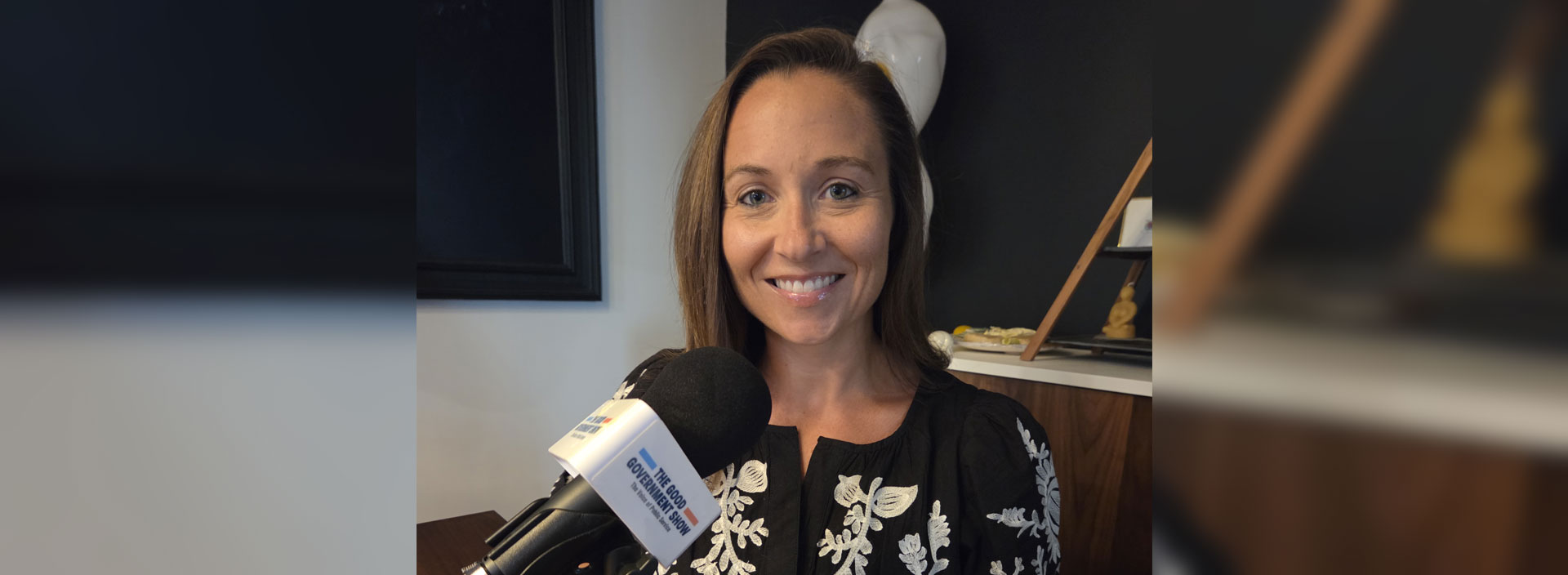
The American experiment is a constant finding. What kind of founder are you going to be?
This episode brought to you through the generosity of our supporters
RELATED POSTS
00:00:00:04 – 00:00:03:21
David Martin
This is the good government show.
00:00:03:26 – 00:00:09:54
Lindsey Cormack
It’s not that they’re being misled. It’s that they really just don’t know these things.
00:00:09:59 – 00:00:19:39
Lindsey Cormack
From 1950s until 2020, civics had the most precipitous decline on minutes in the classroom out of all subjects.
00:00:19:44 – 00:00:26:05
Lindsey Cormack
Teachers will often tell you if it’s not tested, it’s not taught.
00:00:26:10 – 00:00:39:48
Lindsey Cormack
I see plenty that gives me hope. I think children want to be someone who belongs in a community that they are a part of. I think they want to have a purpose. I think they want to see what they do as like mattering to others.
00:00:39:52 – 00:00:47:01
Lindsey Cormack
The way that I put it to my students is politics is going to happen to us, whether we like it or not.
00:00:47:06 – 00:00:57:13
Lindsey Cormack
It’s also so important for our kids to see the people who do this work, because oftentimes they think of them as like nameless, faceless bureaucrats, often DC.
00:00:57:18 – 00:01:03:03
Lindsey Cormack
If this is the party we have to be at, we might as well make it feel better.
00:01:03:08 – 00:01:09:34
Lindsey Cormack
The American experiment is a constant finding. What kind of founder are you going to be?
00:01:09:39 – 00:01:26:28
David Martin
One of the things I hear from people at all levels of government is they wish people were more involved. One of the most common complaints is students today don’t get near enough civic education. On this episode, you’re going to hear a solution. Welcome to the Good Government Show. I’m Dave Martin, and welcome to season eight of The Good Government Show.
00:01:26:30 – 00:01:49:36
David Martin
This is actually our 195th show. Me and the awesome team I have behind me have been doing this for over five years. I’ve reported from at least ten states and been back to both Iowa and West Virginia a few times. I’ve been to Washington, DC at least twice a year. Over the past years. I’ve talked to government leaders from nearly every state in the US and a few from other countries, all in pursuit of finding good government.
00:01:49:36 – 00:02:06:06
David Martin
And I have these are the stories we bring to you in each episode. I’ve met some incredible public servants and some true government legends, and a lot of people who go to work every day just to make government in our lives a little better. They don’t do it for the huge paycheck or the publicity. They do it because they believe in good government.
00:02:06:09 – 00:02:23:02
David Martin
Like today’s guest, an author whose dedicated her career to making better citizens, first, help us show the message of good government by liking us and sharing us where we are. In your favorite social media, please share our show with your friends and review us right here where you’re listening, and join our good Government Show community. Check out our website for the link.
00:02:23:03 – 00:02:38:31
David Martin
I had the pleasure of sitting down with Lindsey Cormack. She’s the author of the book How to Raise a Citizen and Why it’s up to you to do it. First, go buy the book. Read it. It’s written for parents, but it’s also written for anyone who wants to understand civics and wants to become more engaged and learn how government works.
00:02:38:33 – 00:02:58:42
David Martin
There’s a link in the show notes. Check it out. Well, first listen to the show, then by the book, then read it. Then you’ll be a Lindsey Cormack fan like me. Lindsey is a PhD and a professor of political science at the Stevens Institute of Technology. She’s a prolific writer, book author, and speaker. She knows her stuff, and as you’ll hear, she talks to a lot of students so she knows what young people are thinking.
00:02:58:42 – 00:03:18:00
David Martin
And just as important, she knows what students aren’t getting. Here at the Good Government Show, we created the Good Government Institute. The purpose of the institute was to promote the idea that this show will help create better citizens, more engaged citizens. And when they listen to our guests, I hope they trust government a little bit more. That, in a nutshell, is what Lindsay’s book is about.
00:03:18:02 – 00:03:35:18
David Martin
As you’ll hear, she set out to write a book about states that were teaching civics well, but she and her researchers, all students, found out that on the whole, no state was doing it. Well, that’s when she changed the topic and told parents they needed to help raise good citizens. Here’s the thing. This is not really a Republican versus Democrat issue.
00:03:35:20 – 00:03:53:07
David Martin
Both liberals and conservatives want more civic education. The breakdown comes in how and more specifically what we teach. The result is nothing gets done. That’s where Lindsey Cormac book comes in. So coming up, Lindsay Cormack and you’re going to learn how to raise the citizen.
00:03:53:12 – 00:04:16:56
David Martin
The Good Government Show is sponsored by our that’s for our community. Get involved. We hear that all the time from government leaders our co brands with your government’s name and logo, your staff and the people you serve are connected and part of your community. From any device. Your members provide reliable data and meaningful feedback. Ask a question like do we want more parkland or better homeless services?
00:04:16:58 – 00:04:28:12
David Martin
More engaged conversations come through the our app, visit our code that’s and book a demonstration.
00:04:28:17 – 00:04:46:47
David Martin
Once you wrap up this episode of the Good Government Show, give a listen to our friends over at Good News for lefties. This daily podcast highlights news stories that show there’s more good news out there. Other people in government are really trying to do the right thing. That’s good news for lefties. Listen where you’re listening now.
00:04:46:52 – 00:05:00:03
David Martin
Welcome to the Good Government Show. I’m happy to have with me Lindsay Cormack. She is the author of a book called How to Raise a Citizen and Why it’s up to you to do it. We’re going to talk about how to become a good citizen because she knows all about that. Lindsay, welcome to the show.
00:05:00:05 – 00:05:03:27
Lindsey Cormack
Thank you so much for having me. I’m really looking forward to chatting with you.
00:05:03:29 – 00:05:08:53
David Martin
As am I, as am I, so I’m guessing let’s start at the beginning. You have a daughter.
00:05:08:53 – 00:05:10:14
Lindsey Cormack
I have 114 year old daughter.
00:05:10:14 – 00:05:11:46
David Martin
Yeah. And you wanted her to be a good citizen.
00:05:11:46 – 00:05:12:26
Lindsey Cormack
From the beginning?
00:05:12:26 – 00:05:14:57
David Martin
Yes, from the beginning. Is she a good citizen? Yes. She is.
00:05:15:00 – 00:05:15:17
Lindsey Cormack
Oh.
00:05:15:17 – 00:05:20:26
David Martin
So good. Okay. How did you do it? So let’s just tell everybody. How do you raise a good citizen?
00:05:20:26 – 00:05:40:10
Lindsey Cormack
I think you have to first see it as a task. That’s up to you. Because oftentimes parents think that the schools will be able to teach their kids about government and politics and how to be a active participant. But the reason I wrote this book is, as a professor, I saw that most of our school children were not getting a lot of instruction in K through 12.
00:05:40:10 – 00:05:43:51
Lindsey Cormack
So the first thing you have to do as a parent is just take it on. It has to be something that you want to do.
00:05:43:51 – 00:06:00:55
David Martin
So I talk with Mas and government leaders across the nation. One of the things that I hear constantly from all of them is there isn’t enough civic education. Have you gotten a look at, you know, across America to see what civic education is like, and is anyone doing it? Great. And where are we dropping the ball?
00:06:00:55 – 00:06:06:49
Lindsey Cormack
So that’s why I wrote this book, is I work at a school called Stevens Institute of Technology, which primarily an engineering.
00:06:06:49 – 00:06:07:35
David Martin
School.
00:06:07:40 – 00:06:27:27
Lindsey Cormack
In Hoboken, new Jersey. Yes, my students are so bright. Their SAT scores are very high and they are earnest learners. But oftentimes they will fail a very basic pretest on government. And so after teaching there for about six years, I rounded six of them up and said, would you like to be research assistants? I want to go figure out why none of you understand how our government works.
00:06:27:29 – 00:06:37:50
David Martin
When you said, don’t understand, I mean, do they understand? Like, I mean, how basic could could they get? Do they? The three bridges of government, did they? I mean, do they understand that? Do they understand how, you know, people get elected?
00:06:37:52 – 00:06:38:33
Lindsey Cormack
No. And I.
00:06:38:33 – 00:06:38:40
David Martin
Would.
00:06:38:40 – 00:06:57:58
Lindsey Cormack
Say it’s actually it’s actually worse. Like I twice have had students not know how many states we have in the United States. And they’d be like, I don’t know, is Puerto Rico estate, I don’t know is D.C. estate. And so like, it’s just it’s not that they’re being misled, it’s that they really just don’t know these things. And so with those six research assistants, we interviewed teachers in 47 states.
00:06:57:58 – 00:07:15:57
Lindsey Cormack
We looked at curricular decisions and curricular outcomes in every state, and we thought we were going to write a book that was, here’s the states that are doing it well, here’s the states that could learn something. But it became very clear that no state is doing this that well. And so the book changed to being a parent book, because I think that’s really like the only way to get this done, because it’s very hard to change state policy.
00:07:16:00 – 00:07:17:12
David Martin
No states doing it. Well.
00:07:17:14 – 00:07:29:13
Lindsey Cormack
Some states do it better than others, but no state is doing it well enough. Or I think I would say children graduate from most K through 12 schools in a state understanding their government and how to be participants. No, I wouldn’t say any state does that.
00:07:29:13 – 00:07:46:12
David Martin
So I’m old. I graduated from high school in 1978, and I’m pretty confident that we had some civic education. You know, I remember having teachers talk about the Electoral College, how people get elected. Did all of that fade away, or do I just, you know, looking back saying, in my time we.
00:07:46:15 – 00:08:03:59
Lindsey Cormack
No, no, no. From the 1950s onwards, from the 1950s until 2020, civics had the most precipitous decline on minutes in the classroom out of all subjects. And so there’s not like one way we do it throughout the United States. Every state does it different within a state. Private schools do it different than public schools, than religious schools, whatever.
00:08:03:59 – 00:08:24:00
Lindsey Cormack
But there is a modal form of delivery, and usually it is one class in middle school, typically seventh or eighth grade. Sometimes it’s called world history, sometimes it’s called social studies. And one class in high school called government. And that’s it. Every other subject we layer K through 12. You start with little concepts, build into bigger things, maybe advocacy with government, civics, politics.
00:08:24:00 – 00:08:30:05
Lindsey Cormack
We like dip in once in middle school once again in high school. So it’s not surprising that they don’t understand this. They just don’t have enough time to grapple with it.
00:08:30:07 – 00:08:30:53
David Martin
Why?
00:08:30:58 – 00:08:47:11
Lindsey Cormack
Well, there’s a lot of reasons. One of the things that I point to in the book is that when we thought that we might lose the space race, there was this change on what was happening in schools where Stem gets a lot more time in the classroom science, technology, engineering, math. And it has to come at the expense of something.
00:08:47:11 – 00:09:14:05
Lindsey Cormack
And usually the things that it comes at expensive are civics classes and history classes. So if you look at like different sorts of times in the classroom, as those go down, science, technology, engineering, math all go up. Another reason it’s hard to do this sort of work is after the No Child Left Behind Act, we had to have measurements to assess reading and math, but there’s no measurements that you need to assess for social studies, so teachers will often tell you if it’s not tested, it’s not taught.
00:09:14:12 – 00:09:35:37
Lindsey Cormack
Simultaneous are actually a little bit before that the SAT and the Act, neither one of them since 1987 has any social studies component to it. So there’s no need for a high school teacher to get you up to speed on these things for that pivotal test that decides what college you’re going to get into. Then you add in layers of parents who are really hard to.
00:09:35:42 – 00:09:51:26
Lindsey Cormack
They don’t really want teachers to talk about some of these subjects with their kids. And so parents will say, like, you know, that doesn’t reflect my values, or I don’t like the way that you approach this subject. And so teachers are like, you know what? I’d rather not talk about this at all. And so there’s just a lot of reasons that in American classrooms it’s a constrained environment.
00:09:51:26 – 00:10:00:28
Lindsey Cormack
And so it’s very hard for teachers to do it even if they’re trying as hard as they can. And I would say most people have really fond memories of their social studies teachers because generally are try hard.
00:10:00:31 – 00:10:01:57
David Martin
This must have made you crazy.
00:10:02:02 – 00:10:15:06
Lindsey Cormack
It didn’t make me crazy. It actually, I think it’s kind of understandable because both the left and the right will say we need more civics education, but then they fight in state houses about what civics education is going to look like. Like what histories you’re going to tell, what are the things you’re going to include.
00:10:15:06 – 00:10:21:49
David Martin
And not dealing with. Now in the Smithsonian, for example, like what story do we tell and what story can’t we tell? And why are we telling that story and not this story?
00:10:21:51 – 00:10:43:42
Lindsey Cormack
Absolutely. And so both the left and the right have a similar goal, which is like more education on this topic, but because they’re grappling with what that’s going to involve, usually nothing gets done. So like at the federal level, we have had legislators introduced bills to fund more civic education for the last 16 years. None of them go anywhere because they fight about what the minutia is going to be for, like how you’re assessing it or what sort of material you’re going to use for it.
00:10:43:42 – 00:10:50:25
Lindsey Cormack
And that plays out throughout every US state. Every Democratic and Republican Party within a state legislative chamber has that sort of fight.
00:10:50:25 – 00:11:04:29
David Martin
But can’t some of the basics be taught? This is the Electoral College. This is how the Electoral College comes together. This is how we vote for a representative. This is how we vote for a senator. Senator served six terms, Representatives for two terms. I mean, those aren’t Partizan issues, right?
00:11:04:32 – 00:11:21:16
Lindsey Cormack
Those are not Partizan issues. But I’ll give you an example that I talk about in the book, which is a teacher can say, look, there’s three branches of government. The first branch is the Congress. It’s article one of the Constitution. It’s the innovation of the United States system, which is like there’s a legislative branch that is equal or more powerful than an executive branch.
00:11:21:19 – 00:11:40:46
Lindsey Cormack
Second branch is the executive article two. Third is the judiciary. That’s like very basic and set out a child can come home and tell their parent, here’s what I learned today. And that parent can hear, oh, your teacher must not like the president. They said the Congress is more important than the president. And so they’ll inflame a Facebook group or email a principal or barrage the teacher themselves with sort of like their opinions on it.
00:11:40:46 – 00:11:51:05
Lindsey Cormack
And so even if you’re trying to be middle of the road or like no road at all, just hear some basics. It’s a fraught environment and they get blowback, so they’d rather not do it.
00:11:51:05 – 00:11:52:05
David Martin
That’s not good.
00:11:52:07 – 00:11:54:07
Lindsey Cormack
I agree it’s a hard place to be.
00:11:54:09 – 00:11:56:43
David Martin
Yeah. What was the response you got from teachers on this?
00:11:56:43 – 00:12:14:35
Lindsey Cormack
Everyone, every teacher who I’ve ever talked to in the formation of the book or since it’s been out, has been like, yes, this is a problem. Everyone knows it’s a problem. And part of the thing is they really don’t have enough time in the classroom to do it. So like I said, if it’s one class in middle school, one class in high school, American government is not rocket science, but it does take time.
00:12:14:35 – 00:12:30:14
Lindsey Cormack
And when you couple that with the absence of linear history, because most children don’t learn some sort of like linear history, whether it’s Western civilization or not, they just don’t have it. And so it’s really hard for them to like get the timeline of things. And so if you’re like talking to them about federalism, they’re like, I don’t even know what word you’re saying.
00:12:30:14 – 00:12:34:33
Lindsey Cormack
Like they just don’t have the vocabulary for it because they’re not fluent in it, because they’ve never been exposed to it.
00:12:34:33 – 00:12:39:52
David Martin
I think. Didn’t one state recently decide they were going to teach history, like from elementary school to middle school to high school?
00:12:39:52 – 00:12:57:39
Lindsey Cormack
I don’t know if that happened, but I think I think one of the biggest mistakes we made collectively, everyone shares blame in this is the idea that technology releases us from having to know facts or time, because we can just look it up, because what I find is myself included in this sort of like time in which that change is happening.
00:12:57:39 – 00:13:08:48
Lindsey Cormack
It’s really hard to have a mental map to like what comes before or after something if you don’t have a sense of linear history and the idea that you can just like, look it up means that you just like, don’t even know what to look up.
00:13:08:51 – 00:13:27:40
David Martin
Yeah, no, I can I have a historical mind, I studied history, I liked it. In your book, you talk about civic engagement and you talk about something that we all need to pick up on is create more civic engagement. What’s your solution? What do you advocate and what are you seeing? And more importantly, what are you seeing that gives you hope?
00:13:27:42 – 00:13:42:41
Lindsey Cormack
I see plenty that gives me hope. I think children want to be someone who belongs in a community that they are a part of. I think they want to have a purpose. I think they want to see what they do as like mattering to others. And so what I would say is we ought to expand what it means to be civically engaged.
00:13:42:41 – 00:14:03:35
Lindsey Cormack
It’s not just I voted or I campaigned for someone. It could be I care about my park. I’m organizing a part cleanup once a month. It could be I care about sports in my neighborhood. I’m going to try to organize a league around that, or clean up the whatever, whatever sort of field we’re on. And so I think if you just tell your children about the sort of things that they care about, there is a civic component to it.
00:14:03:35 – 00:14:13:59
Lindsey Cormack
There is something that the community will benefit from. And so it’s just like finding those opportunities and letting them find out what it is that lights them up, that they can match to some sort of civic opportunities. It’s not just voting.
00:14:14:01 – 00:14:14:25
David Martin
Is this.
00:14:14:25 – 00:14:15:39
Lindsey Cormack
Hard is what part.
00:14:15:39 – 00:14:23:05
David Martin
Hard all of this? But is it hard for parents to pick up the mantle of civic education and promoting civic engagement?
00:14:23:08 – 00:14:52:01
Lindsey Cormack
What I have heard when I do talks on this is to sort of responses. The first one, which is normally moms, not dads. Normally they’ll say something like, well, I just don’t want to lead my children astray because I don’t know that much. And that is sort of like a really inhibiting approach to this because like, we don’t know plenty of things like there’s but if you’ve ever navigated a health care scare and you have to figure out insurance or figure out some like Byzantine hospital system, you realize you can learn things and make things better because you know it.
00:14:52:01 – 00:15:05:10
Lindsey Cormack
And so for parents who say that, I’m like, they do not need you to be government trivia experts. They need you to model what it is to care about something and agree to learn more. So that’s like pushback, number one, that I get pushback. Number two is like, well, I don’t really want to influence the way they see this.
00:15:05:10 – 00:15:18:31
Lindsey Cormack
And I’m like, you’re influencing the way they see this no matter what. Like our children look up to us for what we do, but also for what we don’t do. So if they never see us vote, if they never see us have a hard conversation, if they never see us show up to a city council meeting, they’re not going to know that.
00:15:18:31 – 00:15:37:37
Lindsey Cormack
That’s like something to do. And that’s not you, you know, not influencing them or making their politics like of their own. That’s sort of it’s making it harder for them to step into citizenship because they just don’t see it. And so it’s hard. It’s not impossible. People are hesitant to do it. But I don’t blame parents because a lot of them were already underserved.
00:15:37:37 – 00:15:41:53
Lindsey Cormack
A lot of them were in schools that were already deprived civics, so they don’t know that much themselves.
00:15:41:56 – 00:16:00:38
David Martin
How do you advise people to negotiate the political divisions? You know, you could have a conservative parent, one conservative and one liberal parent, or you could have liberal parents and conservative kids because they’re surrounded by that at school. You know, I’m making all this up, but how do you know that?
00:16:00:40 – 00:16:15:15
Lindsey Cormack
Yeah. So I always tell people, I think the way I think about it is through an analogy, which is if you were trying to raise a child who said, I want to be an athlete, you would say, okay, what do you want to play? They say, I want to play soccer. You say, great, I’m going to teach you the rules of the game.
00:16:15:15 – 00:16:30:58
Lindsey Cormack
We’re going to watch some tapes of old film of like people playing soccer. We’re going to go onto the field, we’re going to scrimmage, we’re going to do drills, we’re going to get stronger. And then you’re going to be the best soccer player you can be. You teach them the rules of the game. If you only wanted to teach them to be a spectator, it would be easier.
00:16:30:58 – 00:16:49:16
Lindsey Cormack
You could just say like, here’s the colors that you paint on your face. This is the chant that we do. We boo, and that guy gets on the field. But that’s what raising a partizan is. And so I see the difference as raising an athlete versus a spectator is raising a citizen versus a partizan. And so it doesn’t really matter what the sort of ideological underpinning you have or what you think your kids have.
00:16:49:18 – 00:16:58:20
Lindsey Cormack
You want them to understand the game and let them play for whatever team they want to eventually. And so I don’t think it’s like really much of a concern. You want them to understand the rules. That’s what they don’t understand.
00:16:58:22 – 00:17:00:44
David Martin
Do you talk with your daughter about current events?
00:17:00:44 – 00:17:03:53
Lindsey Cormack
We talk very often about current events. Yeah, yeah.
00:17:04:08 – 00:17:05:27
David Martin
Does she enjoyed the conversation?
00:17:05:29 – 00:17:21:33
Lindsey Cormack
Mostly. She also I serve in a hyper local form of government called the Community Board, and I chair our committee that does cannabis licensing. And so she hears a lot about cannabis regulations. And she is my eyes on the ground when like a new store opens up and they’re in violation of something.
00:17:21:35 – 00:17:30:13
David Martin
So community boards are very, very, very local neighborhood sort of not really government organizations, but advisory boards. Yeah. The city of New York.
00:17:30:16 – 00:17:46:08
Lindsey Cormack
That’s right. They’re appointed by borough presidents. And so they are advisory in nature. Yeah. And it’s like the first stop for things. But now I have my little eyes on the ground. She will tell me, like, hey, this thing opened up by my school and I don’t think it’s in the regulations. And she wouldn’t have done that if she probably hadn’t heard me talk about it, but she seems to like it.
00:17:46:10 – 00:17:51:46
David Martin
Do you find that current events are a topic of discussion in schools, or do you find it’s avoided at all costs?
00:17:51:48 – 00:18:06:54
Lindsey Cormack
I can only really speak to her school in the context of someone coming home to talk to me, but I will say it’s not avoided and I don’t think it’s actually avoidable. Like, my daughter came home to me this year and she point blank asked me, mom, what are the Epstein files? And I was like, well, what have you heard?
00:18:06:57 – 00:18:09:45
Lindsey Cormack
And that’s like where I start. I just want to know, like, what have you heard?
00:18:09:47 – 00:18:10:23
David Martin
That’s a good place.
00:18:10:23 – 00:18:28:24
Lindsey Cormack
To start. That’s always where I think you should start, because it allows you to set the table with not necessarily their opinions or like they feel like they have to justify something. It’s just like, what have you heard? And so I think today, probably more than any time in the past, because we have little computers in our pockets that have every little piece of information we could possibly want.
00:18:28:27 – 00:18:35:36
Lindsey Cormack
Our children can’t avoid current events. And so I find that in her school, they’re certainly not avoiding it. The teachers might be the students.
00:18:35:36 – 00:18:46:42
David Martin
Aren’t you talk a little bit of in your book about phone free zones, IC technology? I just want people to put their damn phone down for a few minutes. How does that help? And how does that hurt having good citizens? Well.
00:18:46:42 – 00:19:06:20
Lindsey Cormack
I think something that’s really hard about a phone orientation being the default or the dominant way that we interface with the world, is that it really centers the self in a way that you can’t even appreciate. And what I mean by that is all of our phones, every app, every platform is designed to like, keep us just the singular us in it.
00:19:06:20 – 00:19:26:02
Lindsey Cormack
And so like what you’re going to see is different than what I’m going to see. But what you’re going to see is something that is supposed to be mentally attractive to you. And I’m going to see something that’s mentally attractive to me. But that means we lose something in the idea that, like, we should have some shared overlap in what we’re talking about and what we care about, and we just don’t have that as much if we’re all in our own little individual media environments.
00:19:26:02 – 00:19:29:54
Lindsey Cormack
And so I think that’s a problem that phones, that phones like the underlying.
00:19:29:57 – 00:19:32:30
David Martin
Problem, I wish people still picked up the daily newspaper.
00:19:32:32 – 00:19:47:00
Lindsey Cormack
It would be great, right? And it’s hard because we don’t have a shared narrative, like we aren’t listening to the same things. We aren’t seeing the same news. There’s plenty of things that are going to go on in the world that I’m never going to hear about, because none of my algorithms shunt them to me. And same thing for everyone else.
00:19:47:00 – 00:20:01:59
Lindsey Cormack
And so I understand, you know, like technology has tons of upsides and benefits, but I think there are underappreciated downsides that phones offer us. I also think AirPods and any sort of like seamless Air bud that allows you to move through the world is a problem too.
00:20:02:02 – 00:20:03:19
David Martin
Because you’re not hearing the world around you.
00:20:03:21 – 00:20:20:34
Lindsey Cormack
You’re not hearing the world around you. Your brain is certainly not meant to process different auditory inputs the whole time you’re there, it centers yourself. It says, I got to listen to what I’m going to listen to my podcast, my YouTube, whatever. And I can ignore everyone else and I can show them it’s socially acceptable for me to say, like, my ears aren’t available to you.
00:20:20:34 – 00:20:26:08
Lindsey Cormack
I think that’s like a really weird self-censoring that we underappreciated how damaging it could be for us. Collectively.
00:20:26:10 – 00:20:42:23
David Martin
We are the Good Government show, and we are also the Good Government Institute and the Good Government Institute’s mandate for us, anyway, is to provide more civic education and promote more civic engagement. And that’s certainly what How to Raise a Citizen is doing. Tell me, what’s the one thing you want people to get out of your book, how to raise a citizen.
00:20:42:26 – 00:20:53:20
Lindsey Cormack
That they can do it. They can do it. Everyone can do it. You might not feel like you really are equipped with the knowledge you don’t need to be. It’s a starting point. And so the way that the book is set up is part one sort of lays out the problem. It’s like, hey, guess what? We don’t know a lot.
00:20:53:23 – 00:21:12:38
Lindsey Cormack
We’ve been knowing less and less over time. Here’s why it’s hard to do it in schools. And then part two is a primer, which is like, hey, maybe you don’t remember everything in social studies. Maybe you didn’t take those classes. You can get started with some very basics and then go figure out what makes the most sense for you, because the way that I put it to my students is politics is going to happen to us, whether we like it or not.
00:21:12:48 – 00:21:22:43
Lindsey Cormack
The best thing we can do is understand it so we can bend the outcomes to our will. That’s the best. That’s the best approach. And so it’s sort of just like, take your medicine, it’s going to come to you. You have to do it.
00:21:22:47 – 00:21:23:45
David Martin
Who did you write it for?
00:21:23:47 – 00:21:38:51
Lindsey Cormack
It’s mostly for parents, caregivers and educators. Sometimes people will say like, should my child read it? It’s not a book for children. It’s not like offensive for children, but it’s more for people who have some custodial care or desire for generations below them to figure this out in a better way than they have.
00:21:38:54 – 00:21:40:58
David Martin
What surprised you when you’re doing your research?
00:21:40:58 – 00:22:00:31
Lindsey Cormack
Write it. There were there was a joke that I heard a lot that I had never heard before, and there was a joke. Yes, it was in a bunch of different states. Everyone would say, we know who teaches AP, U.S. government. His name is coach, and that joke is in many parts of the country. If you’re teaching social studies in a high school, it’s not going to be full time employment because there’s very few social studies classes.
00:22:00:31 – 00:22:09:57
Lindsey Cormack
And so those people are oftentimes the coach of the football team or wrestling or track or swimming. And that was something I heard across the country was we know who teaches us government. His name is coach.
00:22:09:59 – 00:22:16:01
David Martin
Which, if I’m understanding you correctly, means that it’s not really his primary thoughts during the day.
00:22:16:03 – 00:22:36:52
Lindsey Cormack
I mean, it might not be, but in some ways I think actually coaches are like excellent civics teachers because they are sort of like can do like get yourself together, link up with your teammates, let’s go do it. But I did not realize that this was something everywhere. My social studies teacher was a coach. And then when Tim Walz was nominated for vice president, he too was a social studies teacher and a coach.
00:22:36:52 – 00:22:38:43
Lindsey Cormack
And I was like, everyone’s been saying this to me.
00:22:38:45 – 00:22:41:04
David Martin
Oh, all right. Did you study citizenship tests?
00:22:41:04 – 00:22:42:26
Lindsey Cormack
I mean, I have for.
00:22:42:26 – 00:22:56:06
David Martin
School, but there was a guy at my neighborhood and he was taking a citizenship test. I’d walk down every morning and go, who’s the 16th president? One of the three of government. Who is who is the first vice president? He got he would he would go, okay, I’m ready for you. I’m ready for you.
00:22:56:08 – 00:23:02:03
Lindsey Cormack
Those tests are really hard. And they also like quiz us on like, geography and concepts. Those are difficult tests.
00:23:02:05 – 00:23:06:03
David Martin
Do you have any kind of tests or any kind of like program for schools.
00:23:06:03 – 00:23:21:23
Lindsey Cormack
So there’s a lot we actually are awash in a lot of different ways that we could do this. But I will say the people who are tasked with figuring out how children learn will tell you that it’s action civics, and that means you give them a task to go figure out how a system works instead of just like theoretical civics.
00:23:21:23 – 00:23:41:34
Lindsey Cormack
So for instance, in the East Bronx, there’s the East Bronx Academy for the future, and their celebration of civics weeks has sometimes been through action civics. One of the years that I was there, just like viewing it, they had students who went around their neighborhood and said, within a mile radius of our school, these were all the legal cannabis shops, and they try to figure out how to get that shut down.
00:23:41:34 – 00:23:59:00
Lindsey Cormack
They go to the police. The police say, we didn’t write the law. We can’t enforce this. They go to city council. City council says it’s a state law. You’re going to have to talk to someone in state government. State senator talks to them and says, like, I’m only one person. There’s a lot of people. And so and a lot of action civics is frustrating where you learn, you know, like, I went down this path, it didn’t work.
00:23:59:00 – 00:24:00:52
Lindsey Cormack
I went down this path. It didn’t work. But you.
00:24:00:52 – 00:24:02:14
David Martin
Learned what a great.
00:24:02:19 – 00:24:18:18
Lindsey Cormack
It’s the best education. It is the best to see. Like, here’s the levers that you can pull. Sometimes it works, most times it doesn’t. But you have to keep after it. And that’s much better than if you just laid out like here’s how the cannabis law was written. Here’s what the enforcement statistics are. It’s such a better education to experiential stuff.
00:24:18:22 – 00:24:34:33
Lindsey Cormack
But states have been pushing back against this. So like Texas in 2023 banned all experiential civics because they thought it was too political. They didn’t want people in classrooms talking with elected or appointed officials. And so there’s like this tension on like how we’re going to do this. I think action civics is what education people would tell you is the best way to do it.
00:24:34:43 – 00:24:43:02
Lindsey Cormack
But we should also have a more classic understanding of things like, we have to do those sorts of earlier American literature pieces that we don’t usually do.
00:24:43:04 – 00:24:49:11
David Martin
Every marriage talked to says they love going to talk to students and especially elementary school students. Yeah, and they get a kick out of it.
00:24:49:13 – 00:24:49:49
Lindsey Cormack
Absolutely.
00:24:49:52 – 00:25:07:07
David Martin
I will tell you this. This will make you feel better. I have talked to many county commissioners and local government officials, and they have programs like day programs where they bring students in and they run through city council meeting, and they will go through city council office. They sit with the mayor’s office, they sit with the police chief, they sit with the head of public works.
00:25:07:07 – 00:25:09:39
David Martin
So they get a sort of a civic education for a day.
00:25:09:46 – 00:25:10:05
Lindsey Cormack
And I think.
00:25:10:05 – 00:25:11:14
David Martin
That’s excellent in the country.
00:25:11:22 – 00:25:25:14
Lindsey Cormack
It’s also so important for our kids to see the people who do this work, because oftentimes they think of them as like nameless, faceless bureaucrats off in DC. And what they don’t realize is it’s actually your friends, your neighbors, your relatives. And it looks often it’s not, you know.
00:25:25:16 – 00:25:26:28
David Martin
Like especially at the local level.
00:25:26:30 – 00:25:48:22
Lindsey Cormack
Especially at the local level, like local and state politicians are not like slick making tons of money doing this. They’re mostly volunteers. And my daughter’s sort of assessment of them is she’s like, all these people are like the people who are on yearbook committee. They’re like everywhere. They just want everyone else to, like, pay attention to stuff. And they’re not that sort of like stereotype of being like, evil or out to like, harm.
00:25:48:22 – 00:25:51:26
Lindsey Cormack
The citizens. They’re meant to protect their mostly volunteers who are trying their best.
00:25:51:29 – 00:26:01:19
David Martin
Lindsay Kobach, you are the author of How to Raise a Citizen and Why It’s Up to You. We’re going to come back and get to the tough questions next.
00:26:01:23 – 00:26:26:41
Narrator
Across America, there is a growing demand for leadership that delivers results over rhetoric. The Good Government Institute brings together proven ideas, principled leaders, and real world solutions to strengthen how we govern not by reinventing the system, but by advancing what already works. On our flagship podcast, The Good Government Show, we highlight the leaders behind that progress, demonstrating how effective governance begins with listening, respect and a commitment to serve.
00:26:26:43 – 00:26:31:19
Narrator
Visit Good Governance to learn more.
00:26:31:24 – 00:26:49:21
David Martin
Want to hear more about good government? Check out another show I host leading Iowa Good Government in Iowa cities. I host the show with Brad Cavanaugh, mayor of Dubuque, Iowa, and the immediate past president of the Iowa League of Cities. Together, we talked to leaders in Iowa cities. We talk about what works and what good government looks like in Iowa.
00:26:49:23 – 00:27:07:58
David Martin
Join us right here. We’re listening. Now that’s leading Iowa, good government in Iowa cities. So I have a series of questions I ask every politician. You’re not a politician or someone in government, but you certainly know your government stuff. So I’m going to start with hardest question first. After that they’re easy. What is your definition of good government?
00:27:08:03 – 00:27:20:02
Lindsey Cormack
That’s a great question. Good government is something that provides a benefit to people that otherwise would not have been in place without that sort of action policy decision.
00:27:20:04 – 00:27:25:21
David Martin
If people are frustrated with government, if they don’t like what they’re seeing at any level local, state and federal, what should they do?
00:27:25:23 – 00:27:43:58
Lindsey Cormack
I think the best thing you can do is put it down in writing. And what I mean by that is an op ed to a paper, a local or a paper that’s circulated at your state level is most certainly going to get the attention of state level politician and federal politicians. And the reason why I think you put it down in paper is not because you’re going to change their mind, but you’re going to make them grapple with it in ways that they don’t have to grapple with it.
00:27:43:58 – 00:27:47:43
Lindsey Cormack
If there’s no sort of like public person on the record that has some sort of different opinion.
00:27:47:46 – 00:27:51:50
David Martin
Can I just say you’re my new best friend? Because your advice was to write a letter to the editor.
00:27:51:50 – 00:28:01:16
Lindsey Cormack
I think that is the advice, because if you look at, like federal legislators, they have staffers who are tasked with like scanning the local papers to make sure there’s nothing that’s coming up about them. So it works.
00:28:01:16 – 00:28:07:49
David Martin
So what inspired you to go down this road of raising good citizens, of looking at citizenship, of looking at civic engagement?
00:28:07:52 – 00:28:22:29
Lindsey Cormack
The students that I work with are the biggest inspiration that I have because they are so bright and they are such earnest learners. But I know that they can’t get as far if they don’t understand the landscape of government. And so I was like, I want you all to be equipped with this. I want everyone to be equipped with this.
00:28:22:29 – 00:28:32:36
Lindsey Cormack
But because you’re not, I know it’s got to be worse elsewhere. They’re so well prepared for school, but they don’t have these pieces. And I was like, we need to get better at this. If this is the party we have to be at, we might as well make it feel better.
00:28:32:36 – 00:28:35:43
David Martin
What would you like people to know about government that they probably don’t know?
00:28:35:45 – 00:29:00:56
Lindsey Cormack
I think we have a narrative challenge in the United States. I think oftentimes we focus on when things didn’t go right or when there’s a mistake that’s made or when there’s some sort of horrific accident. But on average, in the short history of the American experiment, we mostly get things right and life is made better for it. And so I wish we would focus a little bit more on the good stories or the stories where we see effective government, not just so we can, like, cheerlead for the United States, but so we can say, oh, guess what?
00:29:00:58 – 00:29:02:51
Lindsey Cormack
We’re capable of this. We could do this again.
00:29:02:53 – 00:29:04:39
David Martin
Well, I’m glad we have you on The Good Government show.
00:29:04:41 – 00:29:05:34
Lindsey Cormack
Yeah.
00:29:05:39 – 00:29:25:52
David Martin
I’m doing I’m doing my part. We’re trying. What do you think we should tell young people? I mean, we’re certainly at a at a I wouldn’t say dangerous times or crossroad, but I think we may be approaching it in the United States at this, at this point in time. What are you telling the kids and what can the young people do to sort of move us past this dangerous time we’re in?
00:29:25:52 – 00:29:27:35
David Martin
Now? If you agree with my premise.
00:29:27:37 – 00:29:43:44
Lindsey Cormack
When I’m with elementary or middle school or even high school students, I usually conclude my talks with them by asking them what kind of founder they’re going to be. And they haven’t thought about that because they think like the founders or people who lived 250 years ago. And I say, no, no, no. The American experiment is a constant finding.
00:29:43:44 – 00:29:59:38
Lindsey Cormack
What kind of founder are you going to be? And so that’s like, what is it that you’re going to do that imprints this country for the better because it is yours to make as you like. And I think if we can cast ourselves as doing that sort of exercise, instead of thinking government is just happening to us, we’ll be better for it because we’ll see it as something that’s ours.
00:29:59:40 – 00:30:03:14
David Martin
When you turn off the news and stop listening to the podcast, what do you do for fun?
00:30:03:16 – 00:30:10:40
Lindsey Cormack
I like gardening a lot. I love being outside, I like swimming. Anything that takes me outside is what I like to do for fun.
00:30:10:42 – 00:30:11:35
David Martin
Where do you get your news?
00:30:11:35 – 00:30:33:19
Lindsey Cormack
So I run a database called DC inbox and I will say I spend most of my time there and what it is, is it’s every email that every member of Congress sends in their official capacity to their constituents. And so I see the news that they want to talk about to their constituents. And that’s my primary source of that’s like how I know what’s happening in the United States.
00:30:33:21 – 00:30:44:30
David Martin
Okay, so this is the good government show. And we always try to end the show on good government. Tell me, in putting this book together How to raise a Citizen. Tell me about a good government project. You came across our program that really inspired you.
00:30:44:30 – 00:31:02:08
Lindsey Cormack
So there’s something that happens in the Hudson Valley in Ulster County that I really like, which is, you know, yeah, here in New York, you know, the I voted stickers. What they do is they have a contest every year for middle schoolers to make the I voted sticker. And sure, that’s not like changing things, but it says like, hey, the artists can have a piece of this.
00:31:02:08 – 00:31:19:52
Lindsey Cormack
And they’ve come up with really, really cute and interesting and different stickers. And I like that. It’s like small baby steps get you used to thinking about this as something you’re going to do someday, contributing to it in like what we’re going to wear. There’s a lot of little opportunities like that and kind of low cost, too. You’re gonna have to print stickers anyway, like make new ones.
00:31:19:55 – 00:31:20:52
David Martin
And you get kids involved.
00:31:20:55 – 00:31:21:33
Lindsey Cormack
Absolutely.
00:31:21:35 – 00:31:37:34
David Martin
All right. Lindsay Cormack, you are the author of How to Raise a Citizen and Why It’s Up to You. And also a member of the democracy group, as am I. So it’s great to sit down and talk with you and talk about civic engagement and how we can all do a little bit better. So thanks for that. Thanks for writing the book, and thanks for coming on the show.
00:31:37:34 – 00:31:40:29
Lindsey Cormack
Thanks for doing this. You’re really good at it.
00:31:40:34 – 00:31:44:58
David Martin
Thank you for saying that. Thanks.
00:31:45:03 – 00:32:06:33
David Martin
The Good Government Institute has a new partner, the Charles F Kettering Foundation. I really like their podcast, The Context, and I bet you will too. They have a new series called Democracy Under Construction. The show is hosted by historian Alex Lovett, and he looks back at the first 250 years of U.S. history. Alex digs into the moments that have pushed us towards an inclusive democracy.
00:32:06:35 – 00:32:14:42
David Martin
You can find it where you’re listening right now, or visit Kettering and give them a follow.
00:32:14:47 – 00:32:34:45
David Martin
What if Lincoln hadn’t been shot? What if World War One hadn’t happened? Jim Ludlow. Good Government, show executive producer, explores both those ideas in two books in Lincoln Beyond the Bullet, he imagines that Lincoln lives and royal cousins. He imagines what would have happened if three kings, all cousins, hadn’t blundered their way into war. What if. Think about it.
00:32:34:48 – 00:32:42:14
David Martin
Go to Good Govt Institute and order a copy.
00:32:42:19 – 00:33:01:58
David Martin
See? It’s not so hard to raise a good citizen. Author Lindsay Cormack makes it easy for all of us. And here’s one idea that really stood out for me. Make your civic engagement local. Clean up your local park beyond the parks committee. Organize a new sports league around your favorite sport. Small things, local things. But all of it relates to becoming a more engaged citizen in your local government.
00:33:01:58 – 00:33:23:02
David Martin
And that, friends and neighbors, is good government. And if I wasn’t already a Lindsey Cormack fan, I was with her answer on what people should do if they don’t like what they’re seeing from government. Her answer write an op ed in a local paper. I’m a former newspaper reporter. I like that. In fact, in the day we talked to is working on an op ed piece of the Washington Post on now, Senator Darlene Graham finishing her brother’s term.
00:33:23:02 – 00:33:37:56
David Martin
She does indeed practice what she preaches. And you should see her flower garden. It’s pretty impressive. Well, that’s our show. Thanks for listening. Please like us and share us with your friends and review us right here where you’re listening, and check out our website. Good government show for extras. Help us keep telling stories of good government and action everywhere.
00:33:37:58 – 00:33:46:10
David Martin
Join us again for another episode right here. I’m Dave Martin and this is the Good Government show.
00:33:46:15 – 00:34:25:10
David Martin
The Good Government Show is produced by the Good Government Institute, a nonprofit organization promoting civic engagement and civic education. All donations to the show helped promote trust in government. You can donate at Good Govt Institute. That’s good govt institute. Executive producers are Jim Ludlow, Dave Martin, that’s me and David Snyder. Jason Stershic is our editor and producer. Join us again to hear good stories about our government right here on The Good Government Show.
00:34:25:15 – 00:34:28:19
Narrator
This podcast is part of the democracy Group.
**This transcription was created using digital tools and has not been edited by a live person. We apologize for any discrepancies or errors.
Executive Producers:
David Martin, David Snyder, Jim Ludlow
Host/Reporter:
David Martin
Producers:
David Martin, Jason Stershic
Editor:
Jason Stershic