
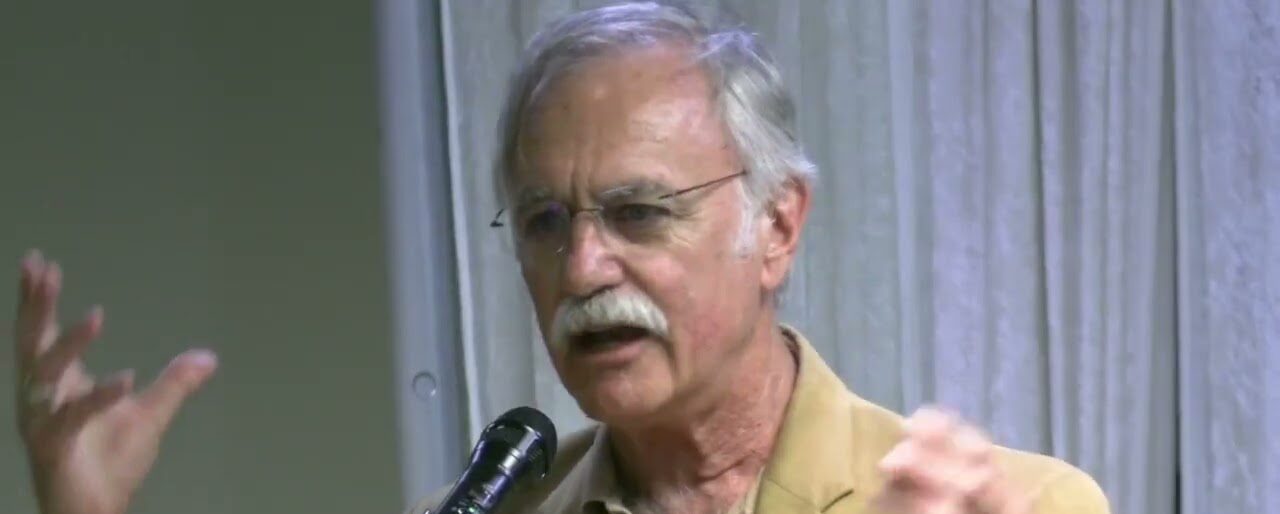
I’ve interviewed a lot of mayors. I’ve heard a lot of governing philosophies. But I don’t think I’ve ever heard one as honest — or as effective — as what John Marchand told me when we sat down to talk about his city.
“I don’t really like politics,” he said. “It’s the price you have to pay for good governance.”
John Marchand is the mayor of Livermore, California, a city of about 90,000 people roughly 40 miles east of San Francisco, in the Bay Area. He’s a former water quality chemist. He taught chess to fourth graders at a public library. He drives a 1996 pickup truck. He makes $18,000 a year — and works the job full time, because he believes that’s what the job requires.
And here’s what that approach has produced: in Livermore’s most recent community survey, 92% of residents agreed that Livermore is a great place to live and raise a family. As Mayor Marchand put it: “In this political climate, you can’t get 92% of the people to agree the sky is blue.”
He’s right. And yet.
How a chemist becomes a mayor
John didn’t plan to run for anything. He was testing the water at his own house when he discovered it didn’t meet federal drinking water standards — specifically, the levels of a class of carcinogens called trihalomethanes (chloroform being the most commonly known). He knew, as a chemist, that the problem was solvable. He also figured he was probably the only person with the right background to solve it. So he ran for the water board.
Within five years of joining that board, both of the water agencies he was associated with — Alameda County Water District and Zone 7 Water Agency — were ranked among the top ten water utilities in the nation out of more than 161,000. He told me about accepting the second award at a national conference. The presenter looked at him funny when he stepped up again. John smiled. “The name’s Marchand. It’s water quality from A to Z.”
From the water board, he went to the city council when an urban growth boundary initiative threatened the character of the community he loved. Then to the mayor’s office. Then he termed out, took a vacation, and came back — because there was a housing project he wasn’t willing to leave unfinished.
130 apartments, seven years, and $6 million trying to stop them
The project: 130 affordable apartments for families who live and work in Livermore. Teachers. Service workers. The people a community needs.
The opposition: a small group of wealthy residents who’d spent more than $6 million trying to stop the project. Environmental lawsuits. Referendum attempts. One lawsuit, John told me, was over the shape of the windows.
He stayed laser focused. Last year, the California Supreme Court cleared the project to move forward. Seven years after he first pushed for it.
“Mayors get things done,” he told me. And then he said it again, like it was a statement of faith.
Play Ball — and the business of bringing people together
Livermore is also home to the International Little League Intermediate World Series — the 13-year-old division — which has been held there for ten consecutive years. The Play Ball initiative, a partnership between Major League Baseball and the U.S. Conference of Mayors, was launched with Cal Ripken Jr., and Mayor Marchand was there from the start.
Why is youth baseball good government? I asked him that directly.
“It brings the community together,” he said. “We have ten different countries coming to Livermore. You’re sitting in the stands next to someone from South Korea or South America or Japan. And you’re all there because your children love the game.”
Nobody’s looking at their phone. Nobody’s scoring political points. They’re watching kids play baseball.
That’s it. That’s the whole thing.
“We are they”
John Marchand’s valedictory speech — which he wrote as a freshman in high school and delivered four years later — was called “We Are They.” The idea is simple: we talk endlessly about what they ought to do. But they doesn’t exist without us.
It became the defining principle of his public life. When kids ask him what to do if they’re frustrated with government, he tells them to do what he did: step up and make a difference.
“It’s a lot easier,” he said, “to be a keyboard commando and sit there and whine. But if we don’t step up, they don’t exist — because we are they.“
That’s the kind of thinking that produces 92% approval ratings.
That’s good government.
I’m Dave Martin, host of The Good Government Show, produced by the Good Government Institute. Every week, we sit down with mayors, county leaders, and public servants across the country to demonstrate that government works — and to show you what that looks like in practice. Find us wherever you listen to podcasts.